Your team has a list somewhere. In a project tool, on a whiteboard, scattered across six inboxes. What it almost certainly is not is complete and that is exactly why nobody quite trusts it. So people keep a private list as well, the real one, in their head.
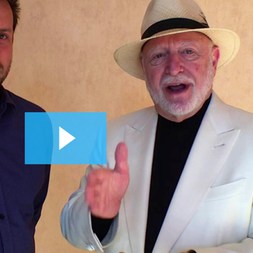
David Allen has spent forty years on that problem. He is the creator of the GTD method and the author of Getting Things Done. In this episode he works through something most people never apply it to: a whole team. Where the five steps break down once more than one person is involved, why role clarity matters more than charisma and why the first thing you fix is never the tool. Worth an hour of your time if your business still runs on what people remember.



Key Takeaways
- Capture is the bottleneck, always. If everything is not out of people’s heads, nobody trusts any of the four steps that follow and they quietly go back to their own private list.
- The five steps are five different jobs. Capturing is not clarifying, clarifying is not organising. Each one needs its own moment and often its own tool.
- The tool does not matter. Allen still captures 98% of the time on pen and paper. Over 300 apps claim to run the GTD method and he calls them all list managers.
- Role clarity is the gap on most teams. Two people agreeing “let’s get this done” without deciding who does what is where the friction comes from.
- Write your standards, then hire against them. Rules of engagement for meetings, email and channels do more for a team than any leadership seminar.
- Delegation runs on two lists. An agenda list for each person you deal with and a waiting for list of everything you have handed off.
In This Episode
- 01:45 Does the creator of GTD think of himself as a systems thinker
- 02:45 Twenty years of practice before a single page of the book
- 06:00 The people who need GTD least are the ones who find it first
- 07:30 Why the five steps have not aged and why tools still come second
- 09:30 The new book on running GTD with other people
- 11:15 Standards and rules of engagement, where a team actually starts
- 17:15 Capture, clarify, organise and reflect are four separate jobs
- 22:15 If you have not captured everything, you cannot trust the rest
- 23:15 Why structure is what makes room for creativity
- 27:00 The agenda list and the waiting for list
👤 Today’s Guest, David Allen
David Allen is the creator of Getting Things Done, the productivity methodology known almost everywhere simply as GTD. He is candid that none of it came from a classroom. He has no formal training in time management, business or psychology and describes the whole thing as street stuff: worked out by doing it, watching what happened, then trying it on consulting clients to see whether it held.
He began in 1982 with a small consulting practice and designed a seminar around it for Lockheed in California in 1983 and 1984. He did not start writing the book until 1997 and it took another four years to reach the shelf. Getting Things Done has since passed three million copies. At the time of recording he was weeks away from publishing a follow-up, Team: Getting Things Done with Others, co-authored with his UK GTD partner Ed Lamont.
📋 The GTD Method for Teams: David Allen’s Five Steps, Applied to a Whole Business
Based on the interview with David Allen, creator of the Getting Things Done methodology.
Most people meet GTD as a personal system: your own head clear, your own inbox down, your own next actions defined. That works and it is where three million copies of the book went. What Allen has spent the last two years on is the question everyone asks about five minutes after it clicks. How do you run this with other people?
His answer is that the five steps do not change. What changes is which of them your team is failing at. Here they are, with the team version of each.
“It’s like the last thing a fish notices is water and I suppose the last thing a systems person notices is that they’re in the system.”
David Allen, 02:00
1 Capture Everything That Has The Team’s Attention
This is the step Allen refuses to let anyone skip and the reason is not tidiness. It is trust.
“The problem is if you haven’t captured everything… you’re not gonna trust any of the rest.”
David Allen, 22:30
If people know there is work floating around that never made it into the system, they will not rely on it. They keep a private list as insurance and the moment that happens your shared list is decoration. Allen’s diagnostic when he walks into a team is one question: what has this team’s attention right now? He is relaxed about how you capture it. Sticky notes, a whiteboard, somebody writing while the room talks.
2 Clarify What Each Item Actually Is
A captured list is raw material, not a plan. Clarifying means deciding, item by item, what this thing is: something we are committed to finishing, reference material, or rubbish. And if we are committed to it, what is the very next physical action and who is doing it.
Allen is blunt that this is where most teams are thinnest. Nobody is born asking “what is the next action?” You have to train yourself to think at that level and if nobody on the team is rigorous about it, the list just sits there generating guilt.
3 Organise It Where The Right Person Will See It
Organising is not filing for its own sake. It is putting the result somewhere the right person will encounter it at the right time. A team can have all the right conversations and then park the outcome somewhere nobody looks again.
This is also where he is least romantic about software. Collaborative tools only work if everybody agrees the protocols, uses them at the same level of detail and keeps them current, which he says is rare. The digital systems that hold are the ones with consequences attached, like a CRM where failing to enter the client data lands you in trouble because someone else needs it on the next call.
4 Reflect On A Cadence The Team Can Keep
Reflecting is the review that keeps the whole thing current. Allen’s warning is that any one of the five steps being out of date is enough to bring the system down and reflection is the step that goes stale first, because it is the easiest to skip when things get busy.
At team level he widens it to the commitments above the task list: your purpose, your standards, the goals for the next twelve to twenty four months, the roles people hold and the projects that have to finish this year. When those are vague, people stop believing the system reflects reality and you get the response he quotes: let’s just fly by the seat of our pants.
5 Engage From Confidence Rather Than Hope
The point of the first four steps is the fifth: when you sit down to work you are choosing from a complete and current picture, not guessing. Allen’s test for whether a team has done enough is refreshingly low. Has this got off everyone’s mind?
His phrase for the finish line is cruise control. What do you need to do to get this project onto cruise control, so everyone is comfortable with who is doing what, where, when and how? If you are there, you have done enough. That standard is what saves teams from over-engineering a process nobody needs.
| Step | The question it answers | Where teams break down |
|---|---|---|
| Capture | What has our attention? | Half of it stays in people’s heads |
| Clarify | What is the next action and whose? | Nobody asks the question rigorously |
| Organise | Where does this live? | Parked where no one will see it |
| Reflect | Is this still current? | Review gets skipped when busy |
| Engage | What do I do now? | Choosing from an incomplete picture |
The People Who Need GTD Least Are The Ones Who Find It First
One of the more interesting admissions is who actually turns up looking for this. Not the disorganised. The already productive, already organised, who have simply run out of room: waking up with more good ideas than they have anywhere to put and nobody to hand them to. That is a ceiling problem, not a discipline problem and it is the same ceiling most business owners hit.
Role Clarity Does More Than Any Leadership Seminar
Asked what he and Ed Lamont chose to write about for teams, Allen’s answer is deliberately unglamorous. Not charisma, not collaboration, not vision. Mechanics.
Two people say “yeah, let’s get this done” and then never have the second conversation about who is doing which half. That, he says, creates a great deal of stress and friction that was never necessary. So the book spends its time on roles: how clear are they, does everyone know which hats they wear and in a small business, where the owner wears nearly all of them, which hats need handing over. Who you hand them to is the whole subject of The Systems Champion.
The same applies to meetings. Do you know the purpose of this meeting? Have you invited the right people? Do they know why they are there? Are you allowing three devices and a late arrival? A written meeting agenda settles most of that before anyone sits down. He calls it advanced common sense and notes that plenty of good teams do it instinctively but cannot replicate it, because they never worked out what they were doing right. Writing it down is what makes it repeatable, which is why we push clients toward documenting what the team does daily.
How much of your team’s work still lives in someone’s head?
If Allen’s five steps made you realise your roles, handovers or review cadence have never actually been written down, this is the fastest way to find out how exposed you are. Two minutes, nine dimensions, a straight answer.
Structure Is What Makes Room For Creativity
There is a version of this objection in every business we work with. Systems will kill the creative part. Allen has heard it for forty years.
“Structure and freedom are hand in glove together.”
David Allen, 24:00
His favourite answer is the centre line on a highway: a constraint you are delighted is there, because it lets you think about something other than whether you are about to be hit. Ask a painter who loves being creative where their brushes are and they are clean, ready and in a known place. Without that they would lose the chance to paint just walking into the studio. The point he lands on is that everybody already has structure. If you were genuinely disorganised you could not get out of bed. The only question is whether yours was designed or just accumulated.
Delegation Runs On Two Lists
The most immediately usable thing in the episode is also the oldest. Back in 1982 Allen had people write every open item on a sheet, decide the next action, then ask one question of each: can this be delegated? Answers came back the next day and people were astonished at how much had been stuck for no reason other than nobody had asked. It is the same discipline behind any repeatable delegation system.
The modern version is two lists and he says these make the fastest difference for the executives he coaches:
- An agenda list per person. Everything you need to raise with that individual, saved up for your next one to one instead of interrupting them six times a day.
- A waiting for list. Everything you have handed off and still care about the outcome of. Without it you find out the thing did not happen at the point it blows up.
“You should only do what only you could do.”
David Allen, 29:00
One correction, if you think of delegation as purely downward: sometimes you delegate to your board or your partner. Getting it off the person who should not be holding it is the point.
Write Your Standards, Then Hire Against Them
Allen’s answer to getting a team to adopt any of this is not a training programme. It is standards, written down, before anyone joins.
Here is how we play on this team. Here is how we run meetings. Here is how quickly we respond to email. Then, when you are recruiting, you ask a straight question: are you willing to play this way? People arrive carrying their own standards and assuming everyone shares them, which is almost never true. Having that conversation before someone starts is far cheaper than renegotiating it later. It is why a written onboarding checklist earns its keep so quickly.
One example will land with anyone drowning in notifications. A company in Norway wrote several pages on channels alone: what Slack is for, what warrants an SMS, what warrants a phone call, what has to be face to face. Allen calls the problem channel creep, because every new channel added to kill email has simply added another in basket to check. A year later those protocols were still working.
On existing teams his advice is modelling rather than mandating. Whoever is influential needs to visibly run the behaviours. He says influential, not senior. If your manager is tracking the six things they handed you and you are not, the discomfort does the persuading.
The Proof He Offers And The ROI He Refuses
Asked for proof, Allen offers a story from Ed Lamont’s work with a large German business. People who had never attended a GTD training were arriving at twenty or fifty unprocessed emails instead of two thousand, purely because everyone around them had adopted the standard. The burnout rate fell sharply. His word for the mechanism is osmotic. Nobody rolled it out to those people. They caught it from the people next to them, which is how company culture actually spreads and the argument for having the standards conversation out loud.
Ask him to quantify it and he turns the question straight back. What are you measuring? Profitability? Quality of working life? Staff turnover? Most people cannot answer, which is the actual finding. Then he offers the only guarantee he will give: name the number you care about, implement this properly and it will improve.
Allen will not name your number. You can.
He is right that the measure has to be yours. If the one you care about is what key person dependency is already costing the business, put your own figures in and watch it add up.
Where To Start This Week
Start with capture, because nothing downstream works without it. Get the team in a room, ask what has our attention and write all of it on a wall until the room goes quiet. Then take one pass at clarifying: for each item, what is the next action and whose is it. Then ask Allen’s delegation question of every single one. That is a morning’s work and it is the highest leverage morning most teams will spend this quarter. If you are wondering who carries the work afterwards, this is what the role looks like in a real business.
The list your team keeps is not the problem and neither are the people ignoring it. Your business is not broken, your systems are. Get the work out of everyone’s head and into something they can trust and the trust is what buys you back the room to think.
Frequently Asked Questions
What are the five steps of the GTD method?
Capture, clarify, organise, reflect and engage. Capture everything that has your attention, clarify what each item is and what the next action would be, organise the results where the right person will find them, reflect on the whole picture regularly, then engage from a complete view rather than a guess.
Does the GTD method work for a team, or only for individuals?
Allen’s follow-up book with Ed Lamont is written specifically for teams. His position is that every principle still applies and you are on a team whether that means a company, a marriage or a taxi ride. What changes is which of the five steps your particular team is weakest at.
Which GTD app should I use?
He is unbothered by this. Over 300 apps claim to implement GTD and he describes them all as list managers. He captures 98% of the time on pen and paper because it is fast, needs no battery and no wifi. Get the thought process right and any tool will work.
Where should a team start with GTD?
Capture, without exception. If everything is not out of people’s heads, nobody trusts the rest of the system, so clarifying and organising on top of an incomplete list is wasted effort.
Why do team collaboration tools usually fail?
Because they only work if everyone agrees the protocols, uses the tool at the same level of detail and keeps it current. Allen says that is rare. The digital systems that hold are the ones with real consequences attached, like a CRM where failing to enter client data has immediate costs.
What is the ROI of implementing GTD?
Allen refuses to answer that until you say what you are measuring: profit, quality of working life, staff turnover. Once you name it, he is willing to bet that implementing the method properly improves that number.
Ready to get started?
systemHUB gives you 100+ ready-made SOP templates across Sales, Marketing, Operations, HR and Finance. Customise them for your business and start building a business that runs without you.
Thank you for listening!
Thanks for joining us for this episode. Do you have any questions or feedback you'd like to share? We'd love to hear it! Let us know in the comments section below.
If you enjoy listening to this podcast, please share it on Facebook and leave an honest review on iTunes. We'd love to know what you think.
Remember, the next system we share could be just the one you been looking for, so subscribe on iTunes so you can get the latest episodes as soon as they’re published.
About The Show
Business Processes Simplified
We interview industry experts and have them share their best small business systems and processes. This is the quickest, easiest and most efficient way to build a systems centered business.